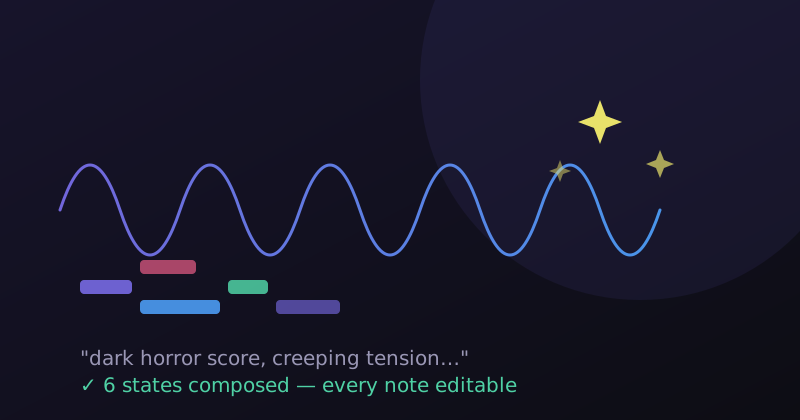
Most AI music tools generate audio — a finished waveform you can't open, can't re-orchestrate, can't loop cleanly, and can't ship as adaptive states. We made the opposite bet: Mowjera's AI generates symbolic music — actual notes on a grid.
Why symbolic beats audio for games
- Every AI draft lands in the piano roll as editable notes — change one melody note, swap the violin for a piano, done.
- Adaptive music needs per-state stems that loop perfectly and crossfade — trivial with notes, nearly impossible with generated audio.
- Your score exports to Unity, Unreal and Godot with the same one-function integration as anything else on the platform.
How a prompt becomes a score
Type "dark horror score, creeping tension, panicked combat" and the model picks parameters our procedural composer understands: a mood per game state, key, tempo, form length, and an instrumentation palette from the voice registry — sampled grand piano, strings, an acoustic kit, CS-80-style analog brass. The generator then writes the notes under real music-theory constraints, so a bad model day can cost you taste, never correctness.
Bring your own model
It runs on the Claude API for the best drafts — or entirely on your own machine with any OpenAI-compatible server like llama-server. Grammar-constrained output means even an 8B local model cannot return a malformed score.
AI drafts, you polish. That's the honest contract — and because the draft is notes, polishing is actually possible.
Try it: open any score in the composer and hit ✨ Compose with AI.