Blog
La musique adaptative, en pratique
Techniques audio, alternatives sans code à Wwise et FMOD, notes de composition IA, et ce que nous apprenons en créant l'audio de jeu sans middleware.
Filtré par #ai — effacer
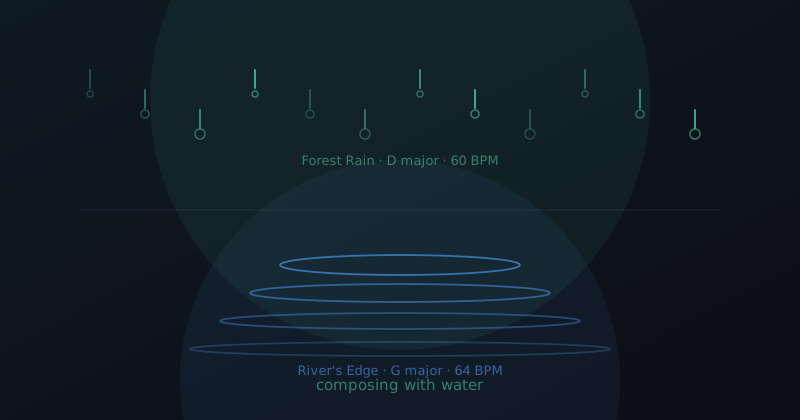
Forest Rain and River's Edge: Composing with Water in Mind
Two pieces in the New Age collection use water as a compositional model — one for rain, one for a river. They share an arpeggio texture but feel completely different. Here's why.
Lire l'article →
The Science of Music and the Brain: Why Music Therapy Works
Music activates more of the brain at once than almost any other stimulus. Here's what neuroimaging and dopamine research show about why that matters clinically.
Cardiac Music Therapy: How Tempo Entrains the Heart
60 BPM is not an arbitrary number. The relationship between music tempo and heart rate is physiological, not metaphorical — and it has real applications in cardiac rehabilitation.
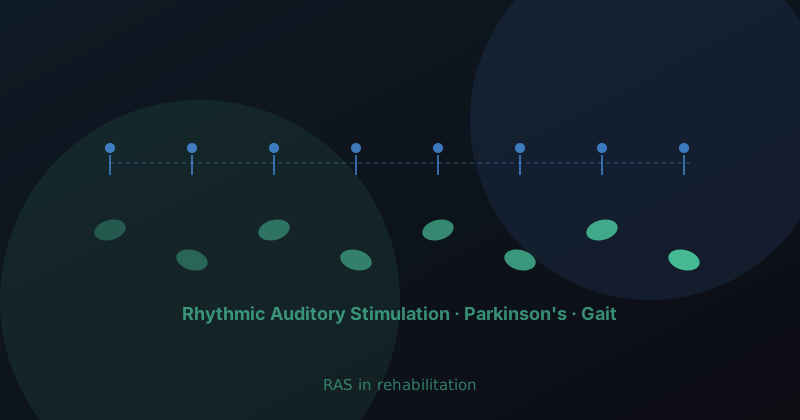
Rhythmic Auditory Stimulation: Music as a Motor Rehabilitation Tool
RAS is one of the most rigorously studied music therapy techniques, with documented effects on Parkinson's gait, stroke rehabilitation, and TBI recovery. Here's how it works and why.
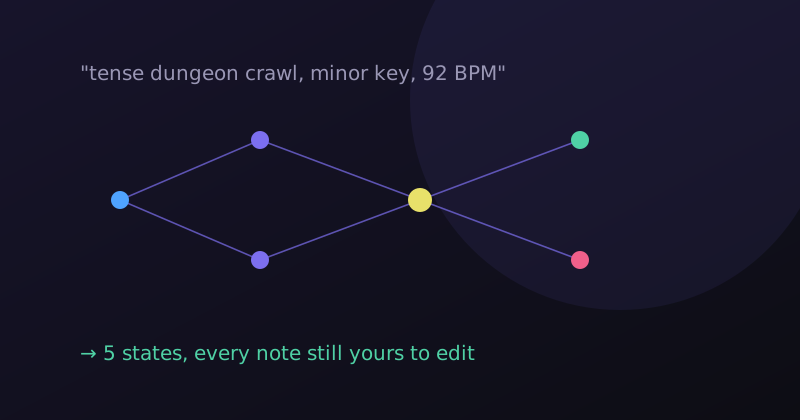
How AI Composes Game Music: Inside Mowjera's AI Composer
'AI music generator' usually means an opaque black box. Here's exactly how Mowjera's AI composer works — what it decides, what stays yours to edit, and why every note remains editable.
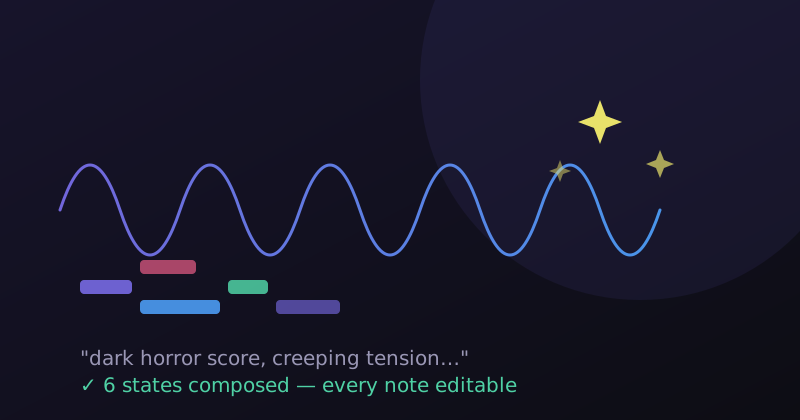
Describe the music, get the score: how our AI composer works
Most AI music tools hand you a frozen WAV. Ours hands you an editable score — here's the architecture decision that makes that possible, and why it matters for game audio.
Écoutez ce dont parlent ces articles
Chaque technique présentée ici est en ligne sur le marketplace — états adaptatifs, brouillons IA, vrais instruments échantillonnés, démos jouables.
Parcourir les partitions