Blog
La musique adaptative, en pratique
Techniques audio, alternatives sans code à Wwise et FMOD, notes de composition IA, et ce que nous apprenons en créant l'audio de jeu sans middleware.
Filtré par #history — effacer
Why We Still Listen to Classical Music in 2026
Classical music is 400 years old at its newest and 1000 years old at its oldest. Here's why it still occupies a meaningful place in contemporary listening.
Lire l'article →
Chamber Music: The Most Intimate Form in Classical Music
Chamber music — small ensembles in small rooms — has produced some of Western art's most profound music. Here's its history and what sets it apart from orchestral music.
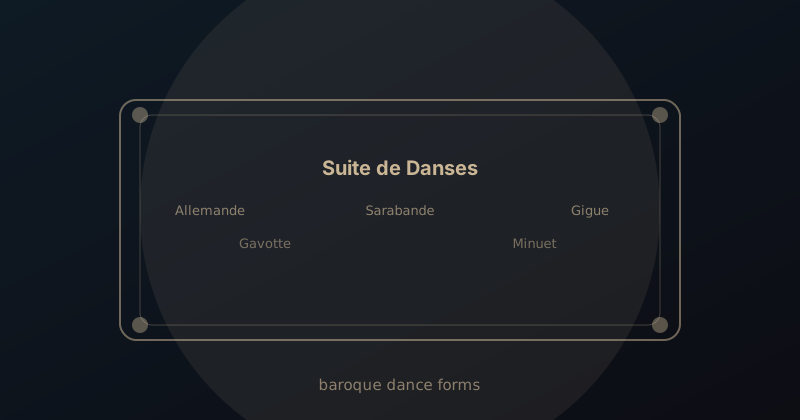
Baroque Dance Forms: The Gavotte, Minuet, and the Suite
Before the symphony and the sonata, European concert music was built around dance. The gavotte, minuet, sarabande, and gigue gave composers a formal vocabulary that lasted two centuries.
Bossa Nova: When Brazilian Music Taught Jazz to Breathe
Bossa nova emerged in late-1950s Rio de Janeiro as a synthesis of samba rhythm and jazz harmony. It changed American music permanently.
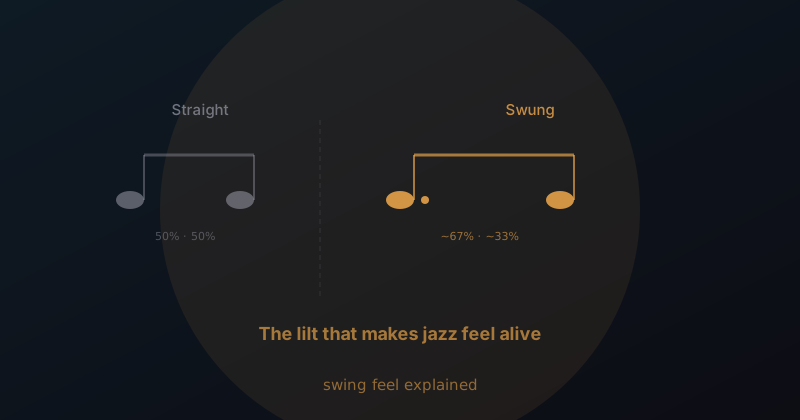
What Is Swing? The Rhythmic Heart of Jazz
Swing is not just a tempo marking — it's a specific way of playing eighth notes unequally. Without it, jazz becomes technically correct but rhythmically inert.

New Age Piano: The Japanese Tradition from Hiroshi Yoshimura to Kiraro
Japan developed one of the world's most distinctive New Age piano traditions — introspective, nature-obsessed, and technically humble in the best possible way. Here's where it came from.
Écoutez ce dont parlent ces articles
Chaque technique présentée ici est en ligne sur le marketplace — états adaptatifs, brouillons IA, vrais instruments échantillonnés, démos jouables.
Parcourir les partitions