The terms "music therapy" and "music medicine" are sometimes used interchangeably in popular health media, and the distinction between them is frequently lost in wellness and technology contexts. For anyone working in or building tools for the therapeutic music space, the difference matters significantly — clinically, legally, and ethically.
The core distinction
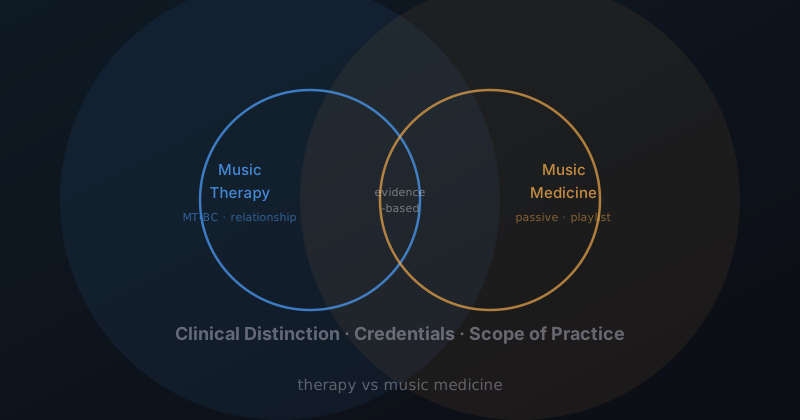
Music therapy involves a therapeutic relationship between a credentialed music therapist and a patient, in which music is the primary medium of assessment, intervention, and evaluation. The therapist is present, responsive, and clinically trained. The music is selected or created based on clinical reasoning applied to the individual patient's goals and profile.
Music medicine refers to the use of pre-recorded music as an adjunct medical or health intervention, administered without a credentialed music therapist. A nurse playing a curated playlist for a preoperative patient is practicing music medicine, not music therapy. A hospital using ambient background music to reduce perceived stress in a waiting room is implementing a music medicine protocol.
Both have legitimate clinical applications. The evidence base supports both. But they are not the same thing, and conflating them creates problems.
Why the distinction matters clinically
The difference is not primarily about whether a professional is present — it's about what kind of professional and what kind of intervention.
A music therapist brings clinical assessment, individualized goal-setting, active responsiveness to the patient's moment-to-moment state, and documentation aligned with treatment plans. A music medicine protocol is standardized, repeatable, and implementable by clinical staff without specialized training.
This has practical consequences:
Scope of appropriate application differs. Music medicine is appropriate for procedural anxiety reduction, general relaxation protocols, and non-specialized applications where the specific characteristics of the music (tempo, key, instrumentation) are the active variable, and where individualization is not essential. Music therapy is appropriate where individualization is essential — complex grief, severe psychiatric conditions, neurological rehabilitation requiring assessment and progressive adaptation.
Credentials and liability differ. A nurse administering a music medicine protocol is practicing nursing, not music therapy. If a healthcare system requires that all music interventions be conducted by MT-BCs, that scope is being respected; if they're using music medicine protocols, a broader range of staff can implement them under appropriate oversight.
The evidence base is interpreted differently. A clinical trial showing that "music reduces preoperative anxiety" may or may not have used credentialed music therapists. Many such trials are music medicine studies — they test a specific musical stimulus, not a therapeutic process. Citing them as evidence for music therapy is valid only if the mechanisms are genuinely shared.
What digital tools can and cannot replace
Music apps, curated playlists, and browser-based composition tools like Mowjera are music medicine tools. They can be excellent ones — carefully designed, clinically informed, evidence-aligned. But they do not replicate the therapeutic relationship, the clinical assessment, or the active responsiveness that define music therapy.
This means:
- A clinician using Mowjera's therapy collection with their own patients is using a music medicine tool in support of their clinical practice.
- A music therapist playing those same pieces in a session is still practicing music therapy — the tool is serving the therapeutic process, not replacing it.
- A hospital putting tablets with therapy playlists in patient rooms is implementing a music medicine protocol — beneficial, but not equivalent to adding music therapists to the staff.
None of this is a criticism of music medicine. It's an honest accounting of what each type of intervention offers.
The gray zone: music therapy-informed technology
The most interesting emerging space is at the boundary: technology designed by clinicians with music therapy training, that builds in individualization, clinical documentation, and adaptive response in ways that start to resemble what a therapist does.
Biofeedback-integrated music apps that adjust tempo based on heart rate. AI systems that generate music matched to patient physiological state. Platforms that allow therapists to customize piece parameters for individual patients and document outcomes.
These tools do not practice music therapy. But they begin to bring music-medicine implementations closer to the clinical sophistication of music therapy interventions. The ethical and regulatory questions this raises — who is responsible for clinical outcomes? what training is required to use the tool? — are live questions in the field.
Practical guidance for clinicians and administrators
- If you are implementing music as a passive environmental intervention without a credentialed therapist, you are practicing music medicine. Document it as such.
- If you want to offer music therapy, hire credentialed MT-BCs. Curated playlists administered by nursing staff are not a substitute.
- If you are using a digital tool like Mowjera in your clinical work, clarify whether you are using it as an MT-BC implementing music therapy, or as a non-music-therapist implementing music medicine. The distinction affects documentation, scope, and liability.
- When citing evidence, check whether the studies you are drawing on used music therapists or music medicine protocols. The evidence base for each is real but distinct.
Music medicine is valuable. Music therapy is valuable. They are not the same thing, and good practice in both requires being clear about which one you're doing.