Blog
Adaptive music, in practice
Technique, Wwise/FMOD alternative comparisons, AI composition notes, and what we learn building game audio without middleware.
Filtering by #audio — clear

Seamless Loop Game Music: Fix Clicks and Gaps
Make seamless loop game music: bar-aligned loops, reverb tail wrap-around, WAV smpl loop points and sample-accurate playback that ends clicks and gaps.
Read the post →
OGG vs WAV vs FLAC for Game Audio: What to Ship
OGG vs WAV vs FLAC for games: compare file size, quality, looping and Godot, Unity and Unreal support, and pick the right format for music and SFX.

Vertical Layering vs Horizontal Resequencing in Games
Vertical layering vs horizontal resequencing explained: how each adaptive music technique works, when to use it, and how to combine both in a hybrid.
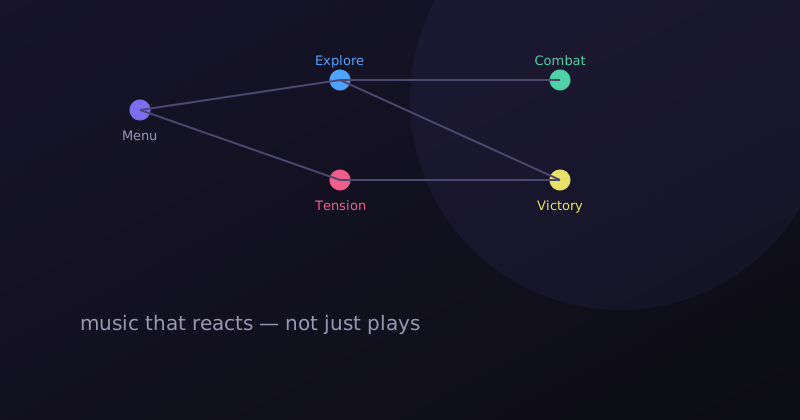
What Is Adaptive Music? A Beginner's Guide for Game Developers
Adaptive music is one of the most misunderstood terms in game audio. A clear, no-jargon explanation of what it is, how it differs from interactive music, and how to start.
Puzzle Game Music: How to Score Without Distracting the Player
Puzzle game music needs to support concentration, not compete for it. A guide to tempo, repetition tolerance, and adaptive techniques for flow-state genres.
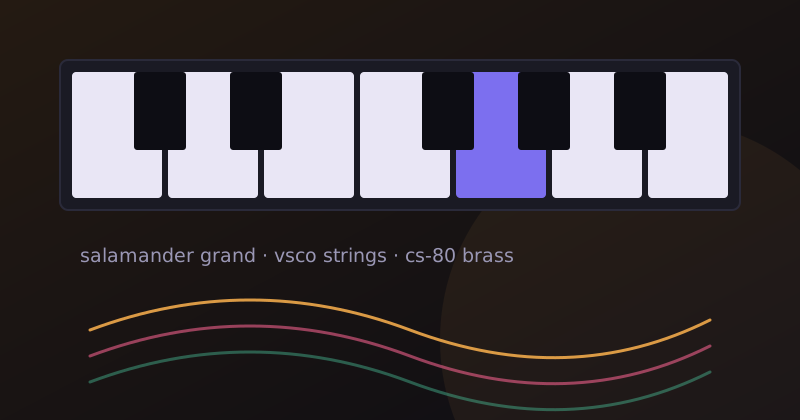
Real instruments in a browser DAW: samples, analog synths, and honest limits
Browsers can't run VSTs — ever. Here's how we got a Salamander grand, VSCO strings and a CS-80-style brass into Mowjera anyway, and where the honest limits still are.
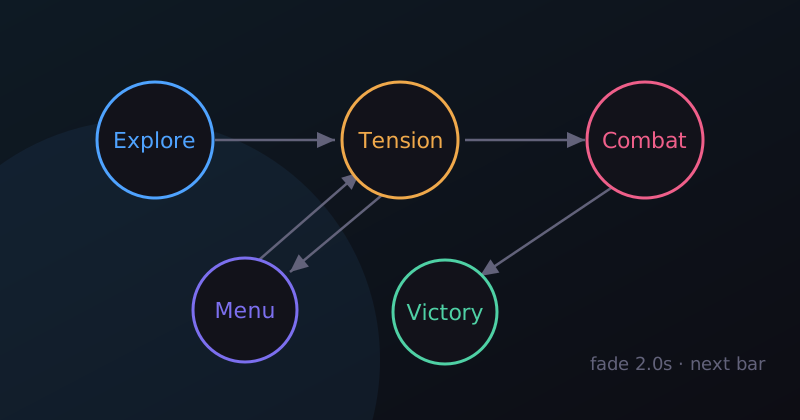
Adaptive music 101: thinking in states, not songs
Game music isn't a playlist — it's a graph. A practical introduction to state-based scoring: Explore, Tension, Combat, and the transitions that make players feel the change.
Hear what these posts talk about
Every technique here is live on the marketplace — adaptive states, AI drafts, real sampled instruments, playable demos.
Browse scores