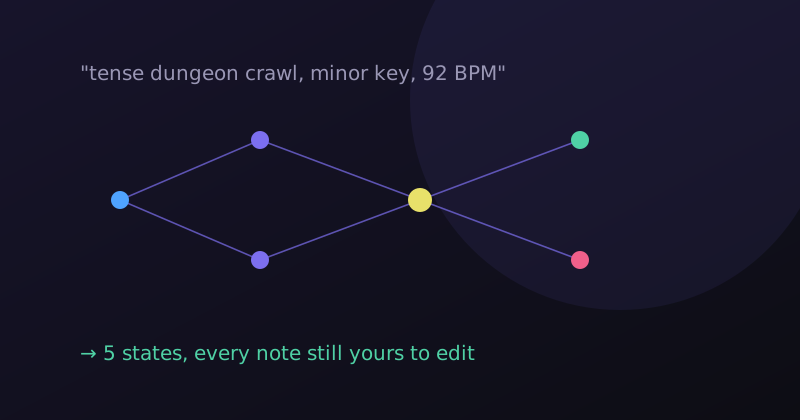
"AI-generated music" covers a wide range of very different technologies, and the differences matter a lot if you're planning to use the output in a real project. Some tools generate a finished audio file you can't edit at all. Mowjera's AI composer works differently — it's worth explaining exactly how, because the distinction changes what you can actually do with the result.
What you give it
A single sentence describing the mood, setting, or scene: "tense dungeon crawl, minor key, something is following you" or "cozy village market, warm and welcoming." No music theory knowledge required — the model translates plain-language description into musical decisions.
What it decides
From that description, the model picks:
- Tempo (BPM) — matched to the described energy (a "frantic chase" scene gets a faster BPM than a "quiet ambient" scene)
- Key and scale — minor keys for tension/danger descriptions, major for warmth/safety, modal choices (Dorian, harmonic minor) for genre-appropriate color
- Form and state structure — how many game states make sense for the description, and what they should be named
- Instrumentation — which of Mowjera's voices (orchestral, synth, sampled instruments) fit the described mood
What happens next — and why it matters
This is the part that distinguishes it from a "black box" music generator: the model doesn't render a finished audio file. It writes actual notes — a real, editable arrangement in Mowjera's piano roll, using a deterministic, mood-based pattern generator seeded by the AI's decisions.
The practical result: every note the AI writes is exactly as editable as a note you'd written yourself. You can:
- Drag notes to different pitches or timings
- Delete or add notes in any track
- Change instrumentation per track
- Add new game states manually
- Adjust the AI's tempo/key choices after the fact
Nothing about the output is "locked" the way a rendered audio file from a pure audio-generation model would be. The AI composer is better understood as a fast first draft than as a finished product — it gets you from a blank project to a structured, editable starting point in seconds, and then you (or a human composer you hire) take it from there.
Why this design, specifically
Two reasons this matters for a game project:
Ownership and control. A rendered AI audio clip is a fixed asset — if it's 90% right, you're stuck with the 10%, or you regenerate and hope for something closer. An editable note-based draft means the 90% that's right stays, and you fix the 10% directly instead of re-rolling the whole piece.
Consistency across a score. Adaptive music needs multiple states that share a key, tempo, and stylistic identity so the transitions feel cohesive. A model that generates each state as an independent audio clip risks producing states that don't actually match each other. Because Mowjera's states are generated within one deterministic system from one set of AI-chosen parameters (same key, same BPM baseline), they're built to fit together from the start.
What it's not good at (yet)
Being direct about limitations: the generator produces solid, usable starting material, not a fully polished, emotionally nuanced final score. It won't replace a skilled human composer's ear for the perfect melodic phrase or an unexpected harmonic choice. What it's genuinely good at is eliminating the blank-page problem — going from "I need dungeon music" to a real, playable, editable arrangement in under a minute, which you can then refine, hand off to a composer, or ship as-is if it already does the job.
Try the AI composer — describe a scene in one sentence and see the actual notes it writes, not just a rendered clip.