Blog
Adaptive music, in practice
Technique, Wwise/FMOD alternative comparisons, AI composition notes, and what we learn building game audio without middleware.
Filtering by #arc — clear
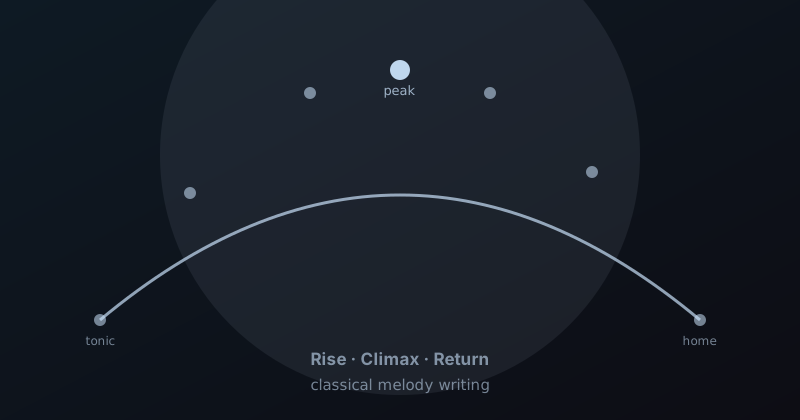
How Classical Melodies Are Built: Shape, Peak, and Return
The best classical melodies follow a structural logic that can be described but not fully explained. Here are the principles behind the melodies of Haydn, Mozart, and Beethoven.
Read the post →
The Science of Music and the Brain: Why Music Therapy Works
Music activates more of the brain at once than almost any other stimulus. Here's what neuroimaging and dopamine research show about why that matters clinically.
Music for Sleep: The Evidence Behind Bedtime Listening
Not all music helps you sleep. Tempo, timbre, and harmonic complexity each play measurable roles in sleep-onset time and sleep quality. Here's what the research shows.
Music Therapy for Autism Spectrum Disorder: What the Evidence Shows
Music therapy is one of the most extensively researched interventions for autism. Here's what it targets, how sessions are structured, and why predictability matters most.
Hear what these posts talk about
Every technique here is live on the marketplace — adaptive states, AI drafts, real sampled instruments, playable demos.
Browse scores